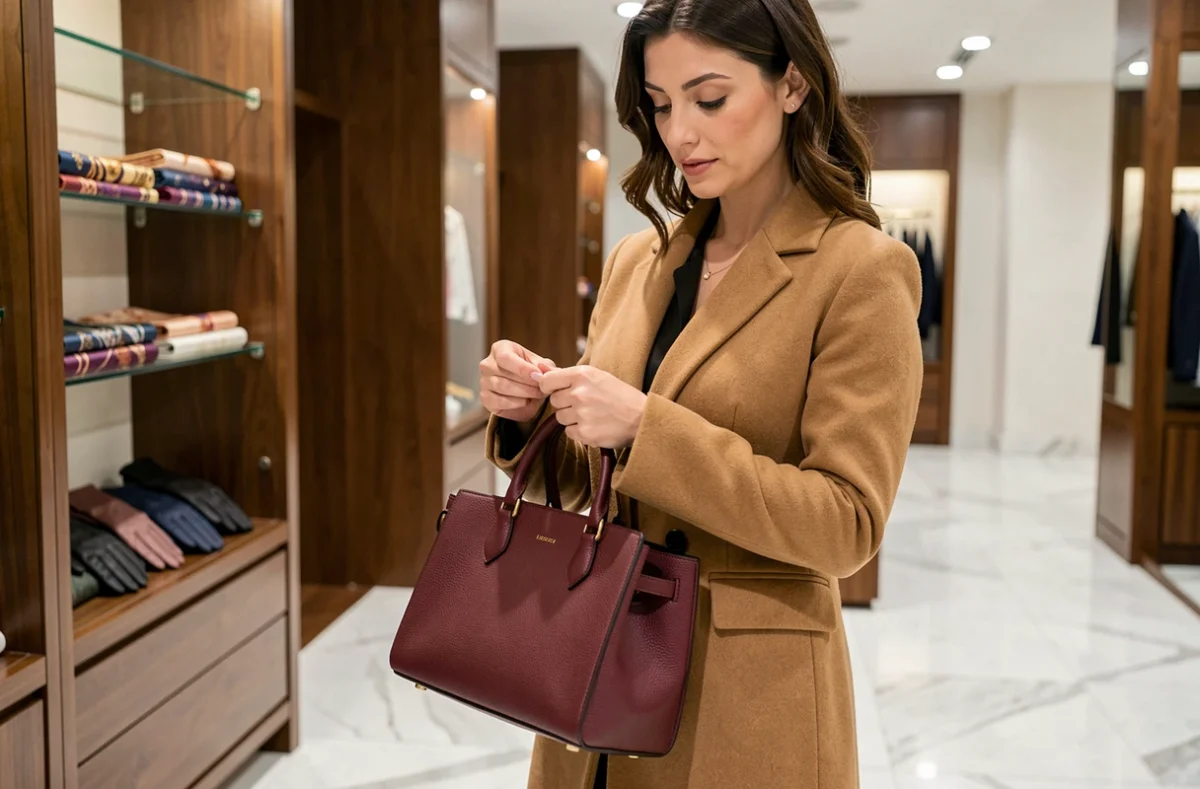
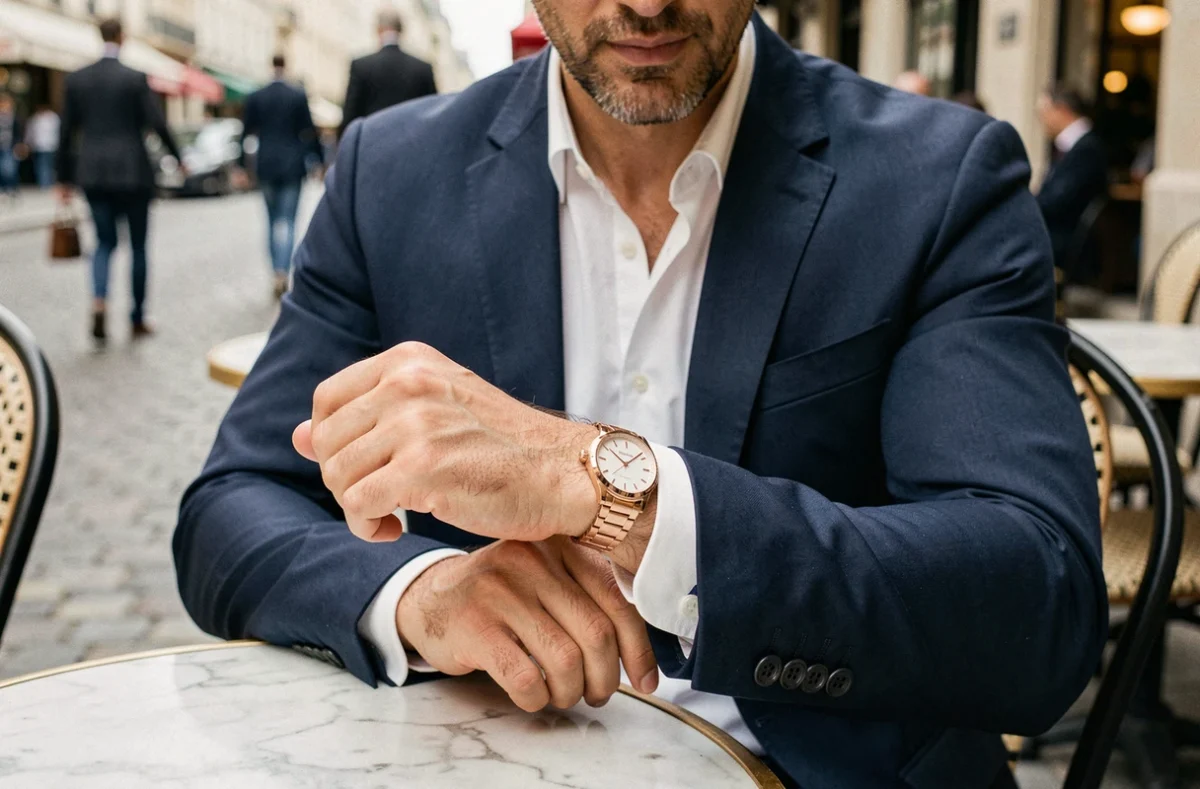
A bag placed on a chair, a watch on the wrist, a discreet ring: these details shape the perception of an outfit long before one notices the cut of a jacket or the fabric of trousers. Luxury accessories function as immediate visual markers. Their selection is based on specific criteria, often more technical than one might imagine.
Digital Traceability and Luxury Accessories: What Changes at Purchase
Have you ever hesitated in front of a piece of jewelry or a bag without being able to verify the exact origin of the leather or stones? This opacity is diminishing. The European regulation on the eco-design of sustainable products (Regulation (EU) 2024/1781), in effect since July 18, 2024, lays the framework for the digital product passport. This system associates each item with a consultable identity sheet: materials, compliance, reparability, end of life.
In practical terms, this means that a gold bracelet or a full-grain leather wallet could eventually be delivered with a digital identifier linked to its complete history. For the consumer, this is a tool for authentication and comparison that did not exist before.
This change also affects resale. When one can prove the provenance and condition of an accessory via a digital certificate, the resale value becomes a selection criterion at the time of purchase. A bag with documented traceability trades better in the second-hand market than an equivalent model without verifiable history.
For those who wish to access Tiffany and Co accessories, this traceability logic enhances the interest in choosing pieces from houses with a transparent production chain.
Jewelry in Precious Metals: Distinguishing Durable from Disposable
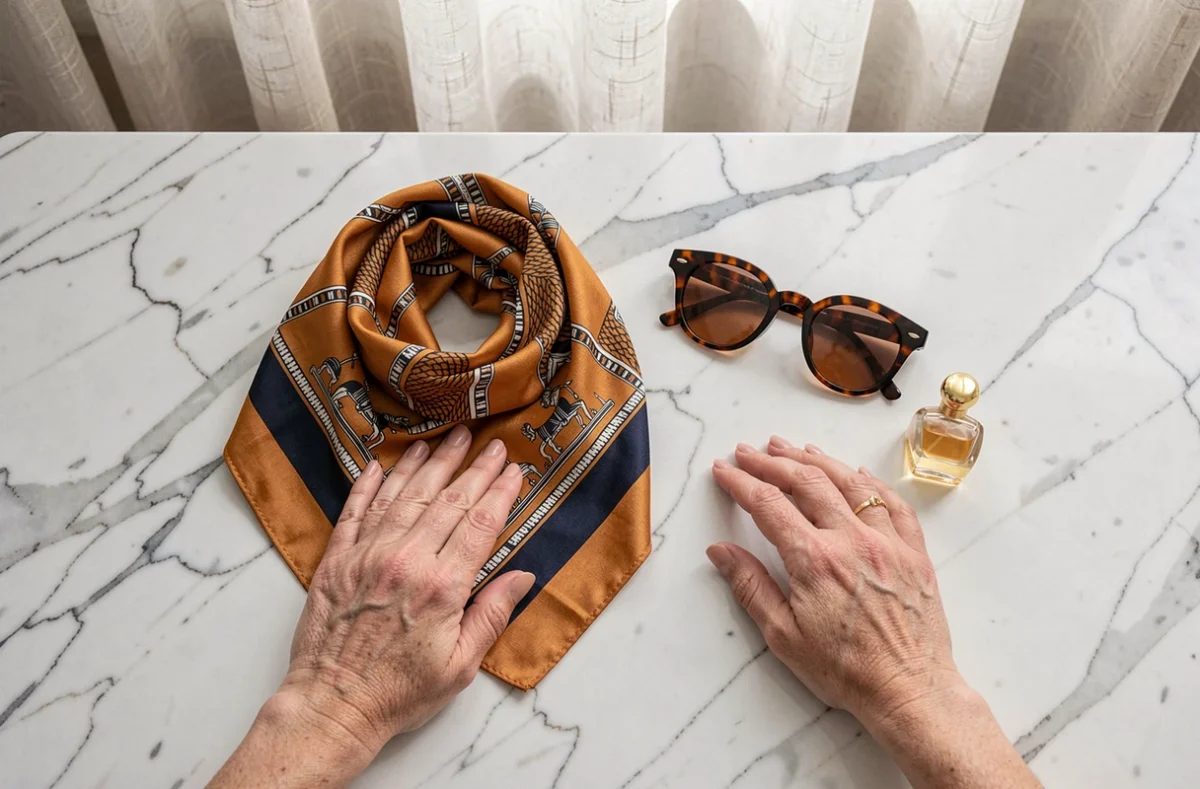
A gold necklace bought from a costume jewelry store and a necklace in 750 thousandths gold do not have the same longevity or behavior when in contact with the skin. The difference lies in the metal composition and manufacturing technique.
Why does this choice matter so much? Because a piece of jewelry worn daily undergoes friction, humidity, and temperature variations. A thin plating deteriorates in a few months. A noble alloy, crafted by an artisan, retains its shine for decades with minimal maintenance.
- 750 thousandths gold (18 carats) resists oxidation and maintains its color without replating, making it a standard for luxury jewelry worn daily.
- 925 silver (sterling) offers an interesting quality-price ratio but requires regular polishing to avoid natural tarnishing due to ambient sulfur.
- Platinum, denser and rarer, is suitable for rings and bracelets subjected to repeated shocks, as it deforms less than gold.
A well-chosen piece of jewelry can be worn every day without thinking about it. It is this simplicity of use that distinguishes a luxury accessory from a decorative accessory with a short lifespan.
Leather Goods and Leather: The Details that Reveal Quality
Leather remains the reference material for high-end bags, belts, and wallets. Not all leathers are created equal, and the confusion between genuine leather, reconstituted leather, and synthetic leather persists.
Full-grain leather retains the intact surface of the animal hide, with its natural irregularities. It is the most durable and develops a patina over time. Corrected leather, sanded and then coated, appears more uniform but ages less well.
Finishes are as important as the leather itself. Saddle stitches (made with two needles, stitch by stitch) resist wear where industrial stitching may fail under tension. Painted or lined edges protect the borders from drying out.
For a bag intended for daily use, the rigidity of the structure, the type of closure (magnet, turn lock, zip), and the presence of protective feet under the base are concrete indicators of durability. These details are not always included in product descriptions, but they determine the actual longevity of the item.
Watches and Horological Accessories: Beyond Just Telling Time
A mechanical watch does not simply tell the time. It expresses a relationship with the manufacturing time, artisanal precision, and long-term maintenance. An automatic movement requires servicing every five to seven years, which implies access to the brand’s after-sales service.
The value of a luxury watch depends as much on its caliber as on the availability of spare parts. A model whose movement is no longer manufactured loses practicality, even if it sometimes gains value in the collector’s market.
For straps, the choice between metal, leather, and rubber depends on the context of use. A steel strap is suitable for daily wear, while an alligator strap requires more precautions against humidity.
Second-Hand and Luxury Accessories: A Market that Structures Choices
The second-hand market for high-end accessories has ceased to be a marginal alternative. Traceability, an item’s ability to retain its value, and the condition of its materials have become common selection criteria.
Since July 19, 2026, large companies can no longer freely destroy unsold clothing, fashion accessories, and shoes, except for documented exceptions. This European regulation pushes brands towards repair, donation, and upcycling rather than destruction. For the buyer, this means potentially broader access to items that have been unsold or refurbished by the brands themselves.
- Verify authenticity through certificates of origin or, eventually, the digital product passport.
- Prefer platforms that offer physical expertise of items before sale.
- Compare the condition of finishes (stitching, clasps, plating) with new standards to estimate the actual depreciation.
A luxury accessory purchased second-hand with solid traceability protects just as well as a purchase in-store. The determining criterion remains the ability to verify what one is buying, not the distribution channel.