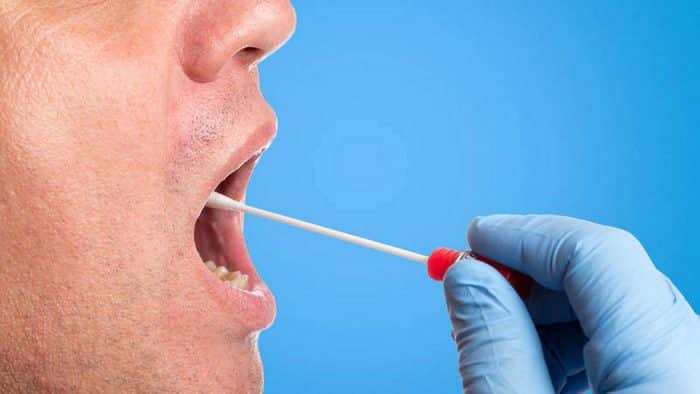
In Italy and in many other countries around the world, cannabis is still considered by many as a full-fledged drug. Despite the significant successes achieved by pro-legalization movements and the thriving market for light cannabis, many employers continue to test for THC and other substances in their employees. One of the most popular methods is the drug saliva test; let’s explore the characteristics of this examination (currently unreliable).
Drug tests looking for tetrahydrocannabinol (the psychoactive molecule in cannabis) have recently taken a remarkable turn, although urine and blood tests are still very widespread, an increasing number of instant tests are starting to be observed focusing on saliva. These principles are relatively recent and present a number of significant flaws, particularly regarding false negatives. In fact, they are particularly easy to “fool” by taking small precautions before undergoing them. Furthermore, given the large margin of error they exhibit, even if they are positive, you can request the possibility of performing a new confirmation test, considering the high unreliability and the lack of regulations in this regard.
Here’s everything you need to know about saliva tests for THC detection and some tips to achieve a negative result in case of a test.
In the meantime, you might also be interested in Light Cannabis and CBD, traces in blood, hair, and urine for workplace tests.
Difference between saliva and urine tests
Today, saliva tests for drug detection by employers or, in any case, by individuals are undoubtedly the most used by all because they are quick to perform, inexpensive, and not at all invasive. Although they are reputed to be very accurate and reliable, the truth is that it is possible, with minimal preparation, to influence the result.
First of all, let’s try to understand the difference between these tests and traditional urine tests: the former detect the actual presence of THC in saliva while the latter look for a metabolite of THC, that is, a substance produced by the passage of THC through the body that remains in circulation for a long time. This helps us understand that a saliva test performed immediately after smoking is likely to be positive, but since THC remains in the mouths of smokers for a limited time, there is a very good chance that it will not be found if one does not use it regularly but only occasionally.
THC in saliva: how long it remains and in what quantities
This is not a very reliable calculation, but if one occasionally consumes THC, the levels of this molecule in saliva can appear close to zero after just 3 days. For more frequent consumers, however, it is difficult to achieve a negative result before 10 days of abstinence, and many tests have shown that they capture traces of tetrahydrocannabinol even after a month.
Does choosing light cannabis help achieve a negative saliva test result?
Obviously, in addition to the amount you have smoked and the duration, the quality of the marijuana you choose will also influence the result; the higher the THC content, the more it will leave traces. For this reason, choosing light cannabis will give you better chances of passing a saliva test the less time has passed since your last joint.
Methods to achieve a negative test (besides abstinence)
If you are looking for a last-minute system to reduce your chances of a positive result, we recommend taking the following precautions:
Maintain impeccable oral hygiene, especially before arriving at work if you suspect or are aware of a health check;
Brush your teeth several times at least 3 or 4 times a day, always use mouthwash, perhaps based on alcohol, which eliminates even more THC residues, but will especially help dilute cannabinoids in saliva;
Drink plenty of water and eat foods rich in calories and fats (lipids help absorb and then eliminate THC).
Can I test positive if I only take CBD?
Fortunately not! If you are a frequent consumer of CBD and do not want to give it up but are at risk of being tested, we recommend choosing to take it with preparations and concentrates that do not contain traces of THC. This way, you will not be able to produce a positive result in a saliva drug screening test, as cannabidiol in Europe is not considered a doping agent and is therefore not tested for. Of course, be careful with products that contain both cannabinoids, as if you are unlucky, even the slightest trace of THC (like that present in legal cannabis) can be detected by a standard test.
Tag: More info on CBD