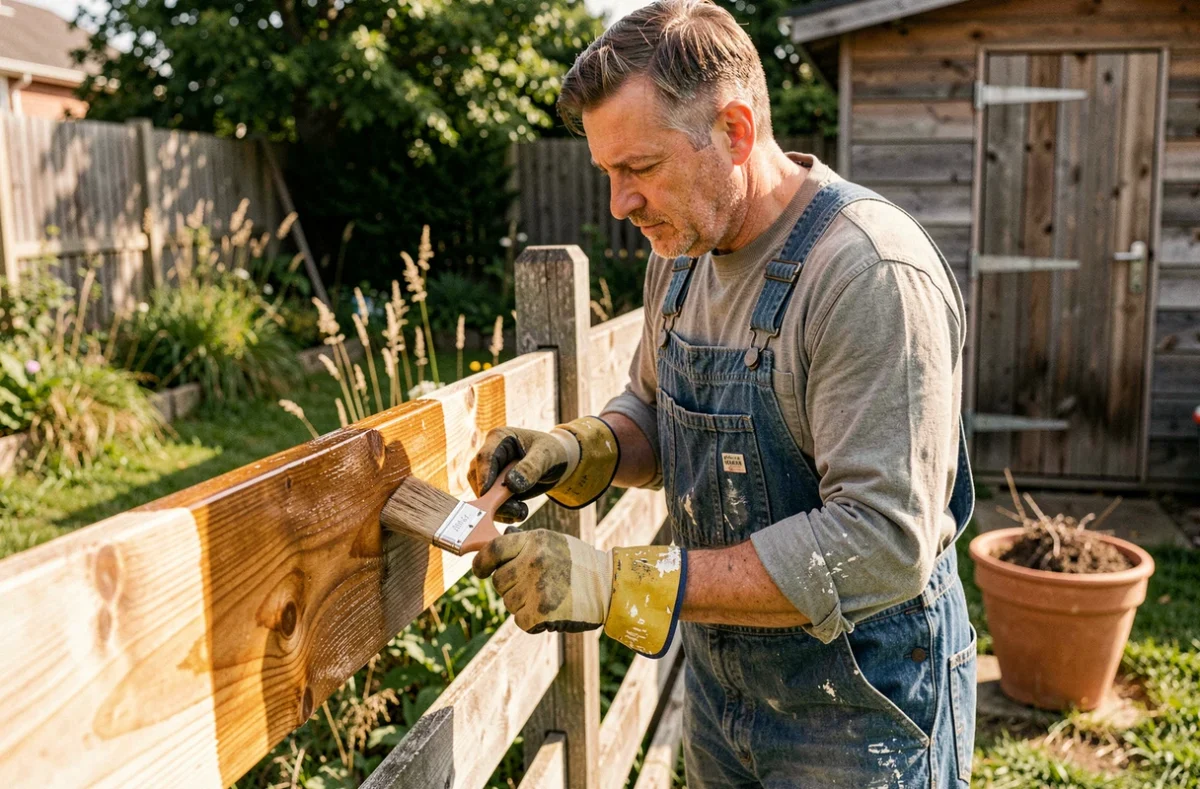
The Parkside wood stain, sold under Lidl’s tool brand, attracts DIY enthusiasts with its aggressive pricing. Available sporadically in stores, it promises polyurethane protection for both interior and exterior woods. The real question remains how this formulation holds up against the permanent ranges of specialized manufacturers like V33, Syntilor, or Bondex.
Lidl’s Parkside Stain: The Issue of Intermittent Availability
Before discussing durability or finish, one point needs to be made: the Parkside stain is not a permanent catalog product. Lidl operates on occasional arrivals, meaning a DIYer might buy a can of rosewood stain in September and not find that exact shade for touch-ups a few months later.
This commercial rotation has a direct consequence on wood maintenance. A stain is applied in successive layers, and touch-ups require the same shade and formulation to ensure a uniform result. With a permanent range (V33, Bondex, Syntilor), the product remains available in DIY stores all year round. With Parkside, this continuity is not guaranteed.
For those looking for a review of Lidl’s Parkside wood stain before purchase, this logistical constraint weighs as heavily as the intrinsic quality of the product.
Number of Coats and Surface Preparation: The Real Comparison Criteria
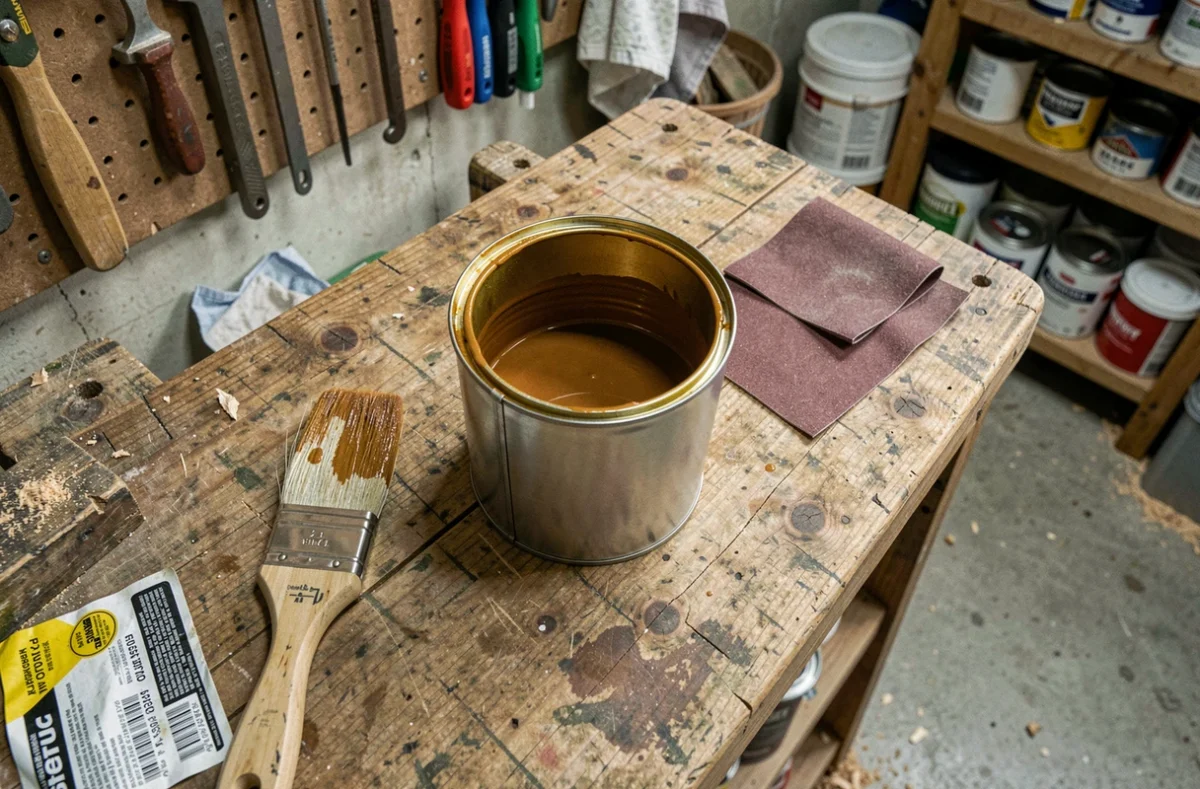
Online content often compares stains based on the price per can. This approach overlooks a crucial parameter: the number of coats required and the preparation needed beforehand.
According to the technical guide published by Midi Papiers Peints, three coats are generally needed on new wood, with a drying time that varies depending on the formulation and ambient conditions. This figure applies regardless of the manufacturer, including Parkside.
What This Changes in the Calculation of Real Cost
A cheaper can per liter can become more expensive if the coverage per coat is lower or if the formula requires a specific primer. To honestly compare Parkside stain to a V33 or Syntilor, one would need to measure the total cost per square meter treated, including the number of passes and the weight applied.
Field reports vary on this point. Some DIYers report satisfactory coverage with just two coats, while others find a more transparent result that requires a generous third coat. Surface preparation affects durability as much as the brand: poorly sanded or damp wood will compromise any stain, even high-end ones.
- Sand the wood with fine grain and dust off before the first coat; otherwise, penetration will be uneven.
- Respect the drying time between each coat, which depends on the temperature and ambient humidity.
- On already stained wood, remove any flaking and apply light sanding to ensure the new coat adheres.
Weather Resistance: How Real Exposure Changes Things
Claiming that a stain “lasts several years” without specifying the exposure conditions holds little value. The same stain applied to a south-facing shutter and to cladding sheltered under an awning will age very differently.
The Midi Papiers Peints guide confirms that durability depends more on exposure and preparation than on the brand alone. The orientation of the surface (south, west), the angle (horizontal or vertical), and the degree of exposure to heavy rain are the three factors that accelerate degradation.
Parkside vs. V33 and Bondex on Exterior Wood
Polyurethane stains, like Parkside’s, offer superior mechanical resistance on paper compared to traditional alkyd stains. The polyurethane resin forms a more flexible film that follows the movements of the wood without cracking as quickly.
However, the V33 and Bondex ranges offer specific variations based on use: high protection stain for cladding, long-lasting stain for shutters, deck stain with abrasion resistance. Parkside offers a single formulation, without segmentation by type of support. For a garden shed that is not heavily exposed, this is suitable. For south-facing shutters, the feedback is more mixed.
Parkside Wood Stain: For Which Type of DIYer
The Parkside stain finds its relevance in a specific context. It is suitable for occasional projects on moderate surfaces, where the relationship between the price of the can and the area to be covered justifies not investing in a premium range.
- Treating a small garden shed or a low fence, where future touch-ups are not a priority.
- First-time stain trial for a beginner DIYer who wants to familiarize themselves with the product before moving on to a more technical range.
- Interior surfaces (shelves, paneling) that are not exposed to UV and moisture, where durability is less critical.
For a complete exterior cladding project, deck, or exposed shutters, a permanent range with specialized formulations is more suitable. The ability to repurchase the same product for touch-ups, combined with technical support from the manufacturer, justifies the price difference.
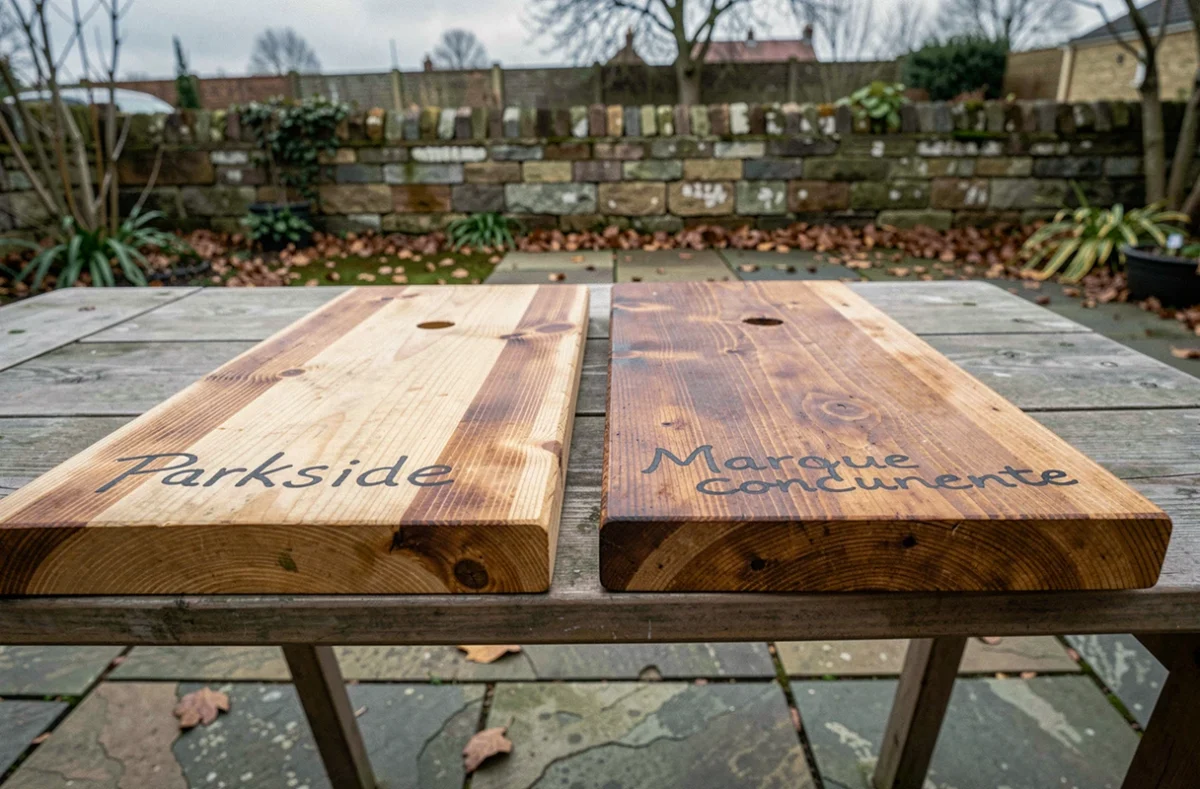
The choice between Parkside and a specialized brand is not merely a question of raw quality. It is a trade-off between immediate purchase price and maintenance cost over several seasons, between occasional availability and permanent access to the product. On well-prepared and less exposed wood, the difference in durability will be marginal. On a demanding surface, the limitations of a single formulation and intermittent distribution will eventually become apparent.