
The prefix 2C on a postal delivery notice does not designate a sender. It encodes a shipping format and a distribution circuit, nothing more. When this mail comes from a bank, the content can range from a simple request for supporting documents to a notification of account closure. Understanding what this prefix entails, and then identifying the likely banking scenarios, allows for a response with the appropriate level of urgency.
Prefix 2C and postal circuit: what this technical code really encodes
The tracking number of a registered letter starts with a prefix assigned by La Poste based on the type of medium used and the postage contract. The prefix 2C identifies a professional shipping format, typically an A4 registered letter sent under a contract between a sender (business, administration, notary office, bank) and La Poste.
This prefix does not allow tracing back to the identity of the sender. It coexists with other prefixes (2D, RW, SD on the new LRSD bundles) that correspond to other formats or generations of media. The recent shift to the Smart Data standard (LRSD bundle) also modifies the structure of tracking numbers, but the old prefixes remain in circulation.
We often observe confusion: receiving a 2C registered letter does not mean receiving bank correspondence. Any professional with a bulk shipping contract with La Poste can send under this prefix. To better understand the meaning of a 2C registered letter, it is necessary to cross-reference other clues beyond just the tracking number.
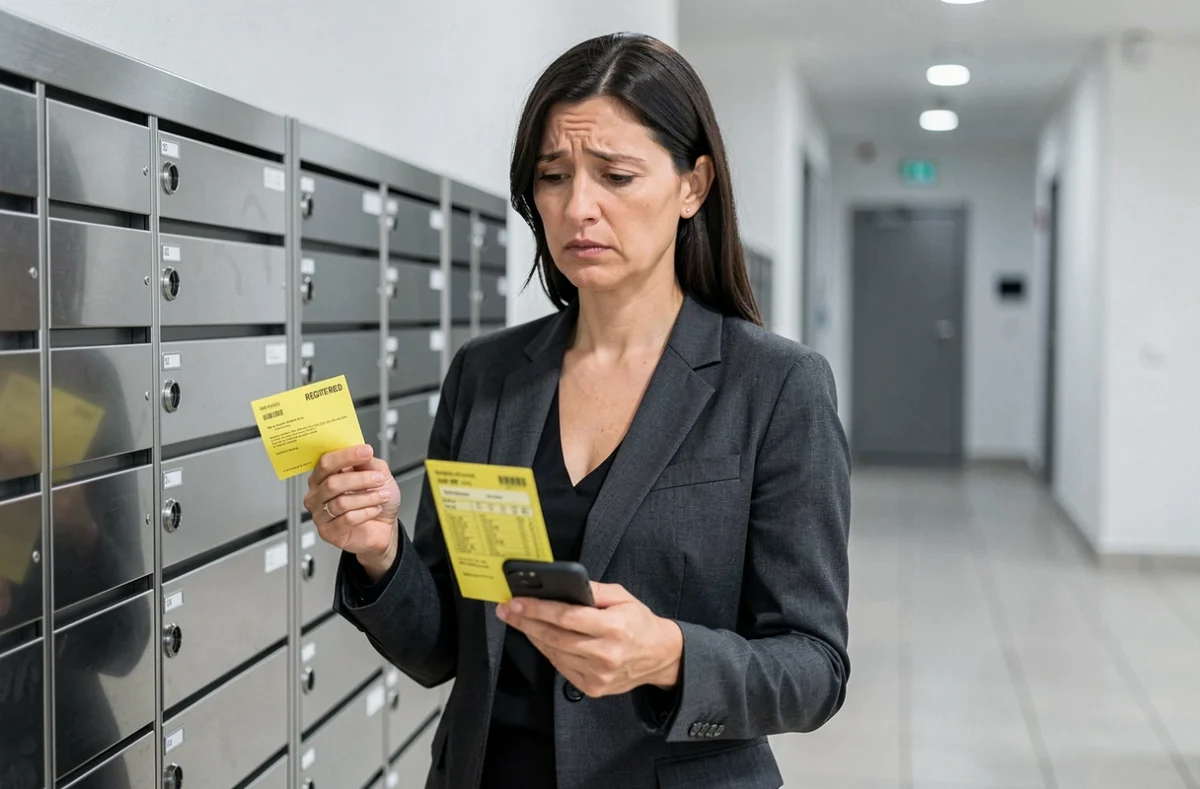
2C registered letter from a bank: regulatory scenarios to distinguish
A registered letter sent by a banking institution almost always responds to a legal or contractual obligation. The most common reasons fall into three distinct categories, each with its own deadlines and consequences.
Request for customer data update (KYC)
As part of its anti-money laundering obligations, a bank may request via registered mail the transmission of identity, address, professional activity, or source of funds documentation. Failure to respond to this request may lead to a restriction of services, or even a termination of the business relationship.
This type of mail does not announce an immediate closure. It opens a response period, usually specified in the letter itself. We recommend not to confuse this formal request for documents with a notification of account closure.
Notification of account closure initiated by the bank
The bank may unilaterally decide to terminate the relationship. The Monetary and Financial Code then imposes a notice period of at least two months before the actual closure. The registered letter formalizes the start of this period. Exceptions exist, particularly in cases of suspected money laundering or inaccurate information provided by the client, where the notice period may be shortened or waived.
Operational incidents or disputes
A banking registered letter may also notify a rejection of a recurring direct debit, a formal notice related to an unauthorized overdraft, or the initiation of a collection procedure. In this case, the letter often serves as a formal notice in the legal sense.
Identifying the banking sender before collecting the mail
La Poste does not disclose the identity of the sender of a registered letter before it is delivered to the recipient. The delivery notice left in the mailbox mentions the tracking number, the presentation date, and the collection post office, but not the name of the sending company.
However, a few clues allow for hypotheses to be formed:
- The format of the envelope visible at the counter during collection: banking mail often uses window envelopes in a professional format, sometimes with a discreet logo on the back.
- The personal context: a recent change in situation (moving, change in income, ongoing loan application) increases the likelihood of mail related to the bank.
- The simultaneity with a message on the online client space: some banks double the postal sending with an electronic notification, which can confirm the origin of the registered letter.
None of these clues provide certainty. Only collecting and opening the mail allows for formal identification of the sender and the reason.

Collection deadline and retention of banking registered mail
A registered letter that is not collected is kept at the post office for fifteen calendar days after the first delivery notice. After this period, the mail is returned to the sender. In banking matters, this return does not suspend the legal effects of the mail: the notice period runs from the first presentation, whether the recipient has collected the letter or not.
Not collecting a banking registered letter does not prevent either the closure of an account or the initiation of a collection procedure. Jurisprudence considers that the recipient has been validly informed as soon as the mail carrier has presented the letter to the declared address.
We recommend keeping the letter and its envelope for at least five years after receipt, during which time financial institutions are also required to retain documents related to the client relationship. In case of subsequent disputes or appeals to the banking mediator, this mail constitutes a central piece of the file.
The prefix 2C ultimately only provides technical information about the shipping channel. It is the content of the mail that determines the rights and obligations of the recipient. Collecting the registered letter without delay remains the only way to eliminate uncertainty and to have the necessary time to respond, whether it involves providing supporting documents, contesting a decision, or preparing the transition to another institution.